Sell colonial and early American coins in Boston
Massachusetts silver, colonial coppers, half cents, large cents and early federal silver. We check authenticity first and grade every piece in front of you.
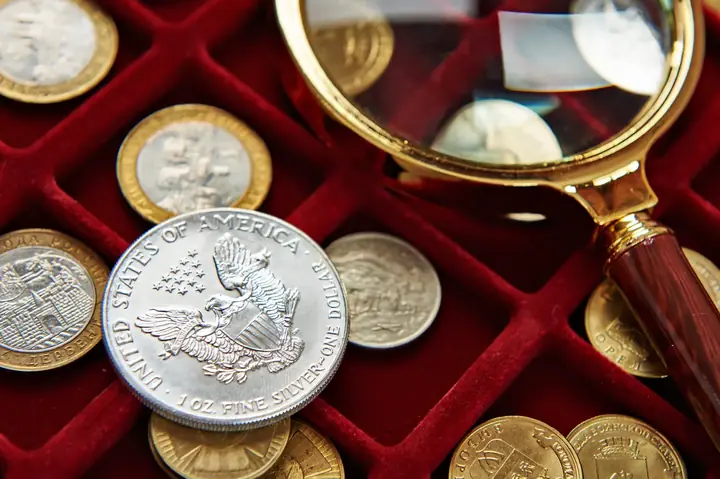
Early coins and New England families
New England has more early American coins in private hands than any other part of the country. Families on the North Shore and in the old towns west of the city often hold a few large cents or a colonial copper that passed down with a family Bible or a box of deeds.
Authenticity is the first question with these coins. Replicas of the Pine Tree shilling and other colonial pieces were sold as souvenirs for over a century, and many look old. We check weight, edge and style before anything else, and we tell you plainly if a coin is a copy.
Real early coins are priced on condition and variety. Two large cents with the same date can be worth very different amounts depending on the die variety and how much detail is left.
What makes early coins different
Early American coins were struck by hand or on simple screw presses, often from dies that cracked and were repaired. That means two coins with the same date can look quite different, and collectors catalog them by die variety. A common variety and a rare one can share a date and a design.
Early coins also rarely survive in sharp condition. Most spent decades in circulation, and many were holed, bent or cleaned along the way. Collectors expect wear. What they look for is honest wear with clear details and no heavy corrosion.
Massachusetts silver in more detail
The Boston mint struck its first coins with nothing more than NE on one side and the denomination on the other. Those pieces were easy to clip and counterfeit, so the mint switched to designs with a tree in the center, starting with the Willow Tree, then the Oak Tree, then the Pine Tree.
Pine Tree shillings come in a large planchet version and a later small planchet version. Both are genuine, and both carry the 1652 date. Large planchet coins tend to be the ones people picture when they hear the name.
Bringing early coins to an appointment
Keep each early coin in its own envelope or holder, and do not stack loose coins together. Soft early silver and copper scratch easily against one another.
If the coin came with a family story, an old dealer envelope or a note in someone's handwriting, bring it. Provenance does not prove a coin is real, but old paperwork sometimes helps us date when it entered the family and how it was described at the time.
Early federal coins we see often
After the colonial and state coinage came the first federal coins from the Philadelphia Mint, starting in 1793. These are the half cents, large cents and early silver that many New England families held onto for generations.
- Large cents from 1793 to 1857, especially Coronet and Braided Hair types
- Half cents, scarcer than large cents in most dates
- Draped Bust and Capped Bust half dimes and dimes
- Capped Bust half dollars from 1807 to 1839, often well worn
- Seated Liberty silver from the 1840s through the 1880s
- Two-cent and three-cent pieces from the Civil War era
How early coins are graded
Early coins are graded on the same 1 to 70 scale as later coins, but the standards allow for how they were made. Weak strikes, uneven planchets and old adjustment marks are normal and do not count against a coin the way they would on a modern piece.
What counts most is honest surface. Collectors pay strong premiums for early coins with original color and no signs of cleaning, smoothing or re-engraving. Corrosion, porosity and old repairs lower the price. We describe each of these on the written offer, so you understand why two coins of the same date can carry very different prices.
Early coins we buy
- Willow, Oak and Pine Tree shillings
- Massachusetts cents and half cents of 1787 and 1788
- Connecticut and Vermont coppers
- Half cents, 1793 to 1857
- Large cents, 1793 to 1857
- Flowing Hair and Draped Bust silver
- Capped Bust half dollars
- Early U.S. gold
How early coins are priced
Early coins sell on collector demand. Grade, die variety, surface and eye appeal decide the price, and many specialists collect by variety number.
Damage, corrosion and old cleaning lower the price, but even worn early coins are collectible. We price each one on its own line in the written offer.
Further reading: Pine Tree shilling value: real or replica?
Common questions
- I have a Pine Tree shilling. Is it real?
- Possibly, but most are replicas. Real ones are thin, hand-struck silver and weigh around 72 grains. Bring it in and we will check it for free.
- Are large cents worth money?
- Yes, almost always. Even worn large cents have collector value, and well preserved ones from the 1790s bring strong prices.
- Should I send early coins for grading first?
- Usually not. We can tell you which pieces would gain from certification before you spend money on it.
- How old are colonial coins?
- Massachusetts silver dates from 1652 to the early 1680s. State coppers like Connecticut and Vermont pieces date from the 1780s. Federal half cents and large cents began in 1793.
- Will you tell me if my early coin is a copy?
- Yes. We check weight, edge and style first and tell you plainly what we find.